
A vertical inline pump making noise usually signals cavitation, bearing wear, mechanical misalignment, or hydraulic imbalance. The fastest diagnosis separates the noise type—high-pitch screaming, grinding, rattling, or humming—then checks suction pressure, discharge pressure, motor current, vibration, and recent system changes. Replacing parts without identifying the root cause often wastes time and leaves the original problem active.
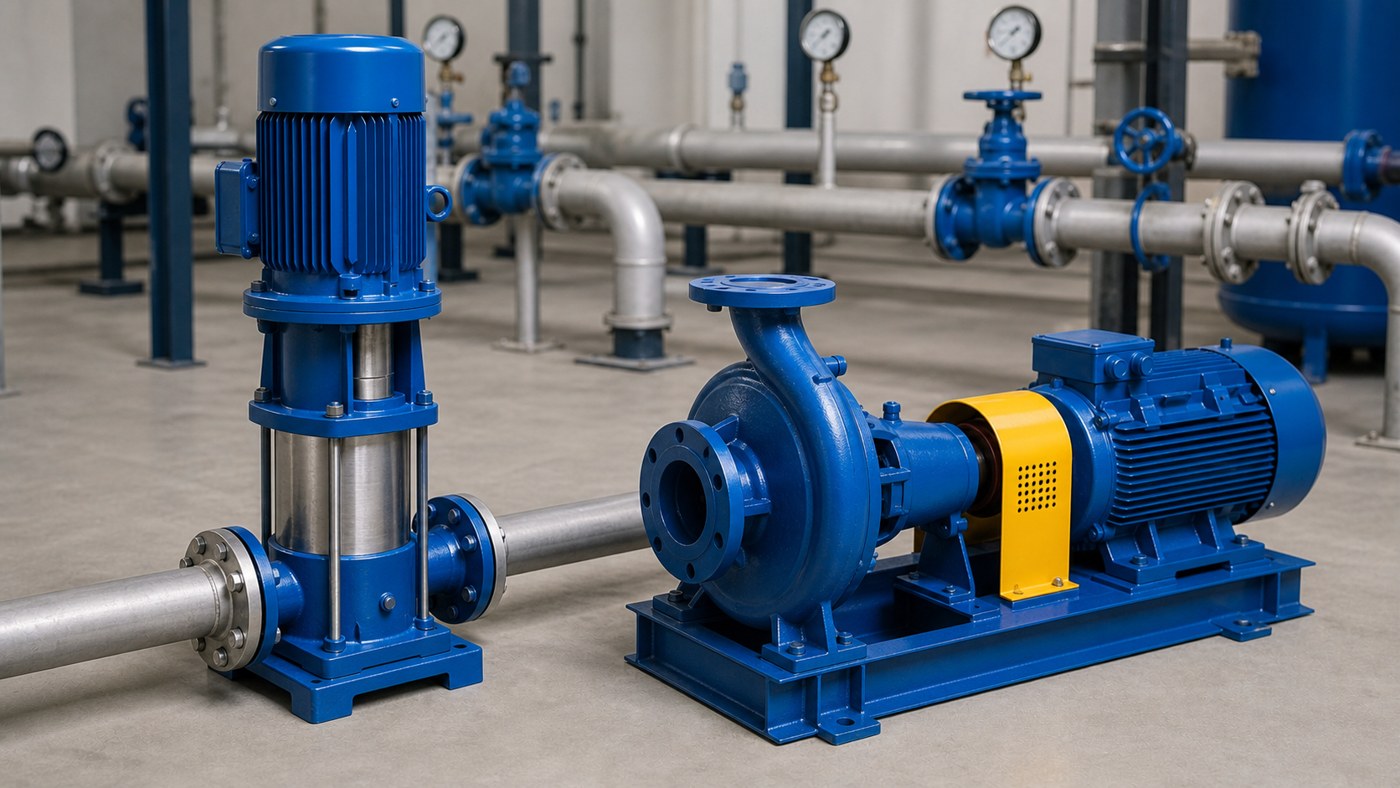
This guide walks through the common noise sources, the field checks that isolate the cause, and the mistakes that lead to repeated failures.
Key Takeaways
- Match the noise signature to the likely source: cavitation sounds like gravel, bearing failure grinds or squeals, loose parts rattle, and hydraulic imbalance hums or pulses.
- Check suction pressure first—most noise complaints trace back to inadequate NPSH, air ingestion, or closed suction valves.
- Compare current operating point to the pump curve; running far left or far right of best efficiency creates noise, vibration, and premature wear.
- Document what changed before the noise started: valve position, liquid level, strainer cleaning, seal replacement, or power event.
- For fire pumps, sewage pumps, or hot water service, verify that control logic and system pressure match the pump’s design range.
Common Causes of Vertical Inline Pump Noise
Cavitation
Cavitation produces a distinctive sound like gravel or marbles tumbling inside the pump. It occurs when liquid pressure at the impeller eye drops below the vapor pressure, forming bubbles that collapse violently against metal surfaces. The result is noise, vibration, pitting, and reduced performance.
Cavitation appears when net positive suction head available (NPSHa) falls below net positive suction head required (NPSHr). Common triggers include:
- Suction lift exceeding pump capability
- Clogged suction strainer or partially closed suction valve
- Hot liquid near its boiling point
- Undersized suction piping or excessive elbows creating friction loss
- Air leaks in the suction line or mechanical seal
Check suction pressure with a gauge installed within two pipe diameters of the pump inlet. If suction pressure is lower than the pump curve requires, address the suction system before assuming an internal pump problem.
Bearing Wear or Failure
Bearing noise ranges from a low grinding sound to a high-pitch squeal, depending on wear stage. Worn bearings also produce radial vibration that increases under load. Bearing failure accelerates when the pump operates with misalignment, pipe strain, unbalanced impeller, or contaminated lubrication.
Inline pumps place the motor and bearing assembly in a vertical orientation, making bearing condition critical to shaft support. Typical bearing life is 20,000 to 40,000 operating hours under normal conditions, but poor installation or off-curve operation cuts that significantly.
Use a vibration meter or stethoscope to isolate bearing noise from other sources. Compare readings at the motor end and pump end. Replace bearings before catastrophic failure damages the motor shaft or housing.
Mechanical Misalignment and Loose Parts
Rattling, clunking, or intermittent knocking indicates loose mounting bolts, worn coupling, misaligned shaft, or impeller rubbing against the volute. Inline pumps mounted directly to piping require careful alignment during installation—pipe strain transfers directly to the pump and motor.
Check the following:
- Foundation bolts and base plate tightness
- Coupling condition and alignment—look for worn elastomers or offset flanges
- Impeller clearance to volute—wear or thermal expansion can close the gap
- Pipe supports near the pump—unsupported weight creates bending stress
A laser alignment tool confirms shaft alignment within tolerance. For inline installations, confirm that upstream and downstream pipe is independently supported and aligned before final tightening.
Hydraulic Imbalance
A steady hum, pulsing noise, or low-frequency vibration often signals that the pump is running outside its best efficiency point. Operating far to the left (low flow, high head) or far to the right (high flow, low head) of the curve creates turbulence, recirculation, and radial thrust that translate to noise.
This happens when system demand shifts—valves close downstream, control setpoints change, or equipment is added or removed—but the pump remains sized for the original condition. Compare the current operating flow and head to the pump curve. If the duty point sits in the unstable region, throttling, variable speed control, or a different impeller may be required.
Diagnostic Steps for Noise Troubleshooting
Effective diagnosis follows a sequence that eliminates guesses and targets the actual cause.
- Identify when the noise started. Was it after a repair, valve adjustment, strainer cleaning, power outage, or seasonal change in liquid temperature? Noise that appears immediately after maintenance often points to installation error.
- Describe the noise type. Gravel sound suggests cavitation. Grinding or squealing suggests bearings. Rattling suggests loose parts. Humming or pulsing suggests off-curve operation.
- Measure suction and discharge pressure. Install gauges close to the pump. Calculate total head and compare to the pump curve at the current flow rate. Low suction pressure confirms cavitation risk.
- Check motor current. Compare measured amps to the motor nameplate. High current with low flow suggests a blockage or closed valve. Low current with noise suggests cavitation or bearing drag.
- Inspect for air leaks. Look for bubbles in sight glasses, foaming at the discharge, or pressure fluctuations. Tighten gland packing, replace mechanical seals, and check suction flange gaskets.
- Measure vibration. Use a handheld vibration meter at the motor and pump bearing housings. Compare readings to baseline or manufacturer limits. High vibration with noise confirms a mechanical fault.
- Verify rotation direction. Incorrect motor wiring reverses rotation, creating noise, low performance, and potential damage. Confirm rotation against the arrow on the pump casing.
Document findings before disassembling the pump. If suction pressure is adequate, rotation is correct, and current is normal, the noise source is likely internal—bearings, impeller clearance, or wear rings.
Field Checks Before Approving Repair or Replacement
Before ordering parts or scheduling a technician, confirm that the proposed fix addresses the diagnosed cause. A common mistake is replacing the mechanical seal or bearings when the root problem is suction starvation or misalignment—those parts will fail again quickly.
For repair approval, verify:
- Suction pressure meets or exceeds NPSHr plus a safety margin
- Discharge pressure and flow match the expected duty point on the curve
- Pipe supports prevent strain on pump flanges
- Motor voltage and phase match the nameplate
- Coupling and shaft alignment are within manufacturer tolerance
- Liquid conditions (temperature, viscosity, solids) match the pump’s material and seal rating
If replacing the pump entirely, send the supplier the current flow requirement, total head, liquid type and temperature, installation orientation, voltage, and photos of the existing setup. For fire pumps, booster systems, or industrial process service, include control logic, pressure switch settings, and any relevant code or standard references.
Common Mistakes That Cause Repeated Noise
- Fixing symptoms instead of causes. Replacing bearings without correcting misalignment or suction starvation leads to rapid re-failure.
- Ignoring suction piping. Undersized suction lines, long horizontal runs, or insufficient submergence create cavitation that no internal pump repair can fix.
- Operating outside the curve. Running a pump at minimum or maximum flow creates noise and wear. Throttle valves, trim impellers, or add a VFD to keep the operating point near best efficiency.
- Skipping alignment after maintenance. Any time the pump is opened or piping is disconnected, re-check alignment before startup.
- Using generic parts. Bearings, seals, and wear rings should match the manufacturer’s specification for material, clearance, and rating. Substitutes may fit but fail prematurely.
FAQs
Can I keep running the pump if the noise is not too loud?
No. Noise is a symptom of abnormal operation. Cavitation erodes the impeller and volute. Bearing wear damages the shaft. Continuing to run a noisy pump increases repair cost and raises the risk of sudden failure, which can flood a room or shut down a critical system.
Why does the noise come and go?
Intermittent noise often indicates variable suction conditions—changing liquid level, cycling controls, or air pockets moving through the system. Check for float switches, pressure switches, or automatic valves that cycle on and off. Confirm that suction pressure stays above NPSHr across the full operating range.
Is cavitation damage permanent?
Yes. Cavitation pits the impeller and casing, creating rough surfaces that worsen performance and increase noise over time. Once cavitation damage is visible, the affected parts should be replaced. More importantly, fix the suction system to prevent recurrence.
How do I know if the noise is from the pump or the motor?
Use a mechanic’s stethoscope or vibration meter to compare readings at the pump bearing housing and motor housing. If the noise is louder at the pump end and decreases toward the motor, the source is hydraulic or in the pump bearings. If the noise is loudest at the motor, check motor bearings, cooling fan, or electrical hum from unbalanced phases.
Should I add soundproofing or vibration pads?
Only after fixing the root cause. Soundproofing masks the symptom but does not stop the damage. Vibration pads reduce transmitted noise but do not address cavitation, misalignment, or bearing wear. Use isolation mounts as part of a complete installation, not as a substitute for proper pump selection and setup.
Conclusion
When a vertical inline pump makes noise, the answer lies in matching the noise signature to the probable cause—cavitation from poor suction, bearing wear from misalignment or fatigue, loose parts from installation error, or hydraulic imbalance from off-curve operation. Start with suction pressure, check the operating point against the pump curve, and measure vibration and motor current before approving a repair. Replacing parts without diagnosing the system condition leads to repeat failures and higher long-term cost. Document the duty, liquid conditions, and installation setup so that any repair or replacement addresses the real operating environment, not just the catalog description.