Submersible pump manufacturer
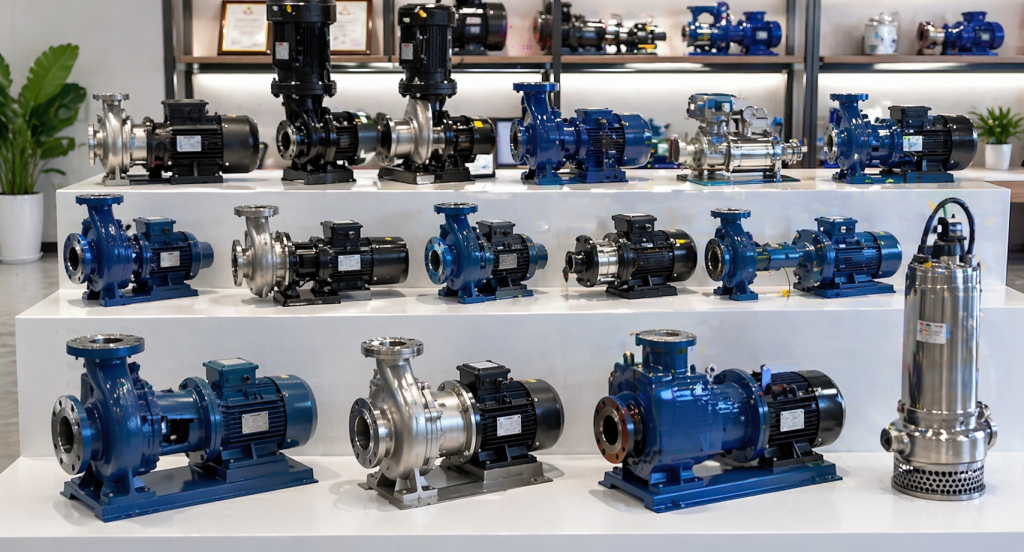
We manufacture submersible pumps for drainage, wastewater handling, deep well water supply, irrigation, and industrial dewatering projects. Our factory helps buyers match motor sealing, pump structure, cable configuration, flow capacity, and material selection to actual submerged working conditions.We manufacture centrifugal pumps for industrial water transfer, circulation, drainage, and fluid handling projects. Our factory helps buyers select pump structures, materials, and motor configurations based on flow demand, head range, installation space, and working fluid conditions.
Submersible Pump Advantages
Sealed Motor Protection
Submersible pumps operate with the motor inside or close to the liquid environment, so sealing control is a key selection factor. We focus on mechanical seal structure, cable entry sealing, motor housing material, and insulation protection to reduce water ingress risk during operation.
Pump Body Material Matching
Our factory selects cast iron, stainless steel, aluminum, or engineered material according to liquid type, working depth, corrosion level, and cost target. Material selection directly affects service life, weight, maintenance frequency, and suitability for outdoor or underground operation.
Application-Based Impeller Design
Different liquid conditions require different impeller structures. Clean water pumps may use closed or semi-open impellers, while sewage pumps often require vortex or channel impellers to handle suspended solids and reduce clogging during wastewater transfer.
Export Packing Support
Submersible pumps are packed according to pump weight, motor size, cable protection, and shipping route. Cartons, foam inserts, wooden cases, and pallets can be used to reduce damage to cable joints, pump outlets, floats, and motor covers during transport.
Custom Submersible Pumps
Clean Water Submersible Pumps
Clean water submersible pumps are used for tank drainage, rainwater transfer, basement pumping, irrigation support, and general water removal. Technical selection focuses on flow rate, head, outlet size, cable length, motor power, and whether a float switch is required.
Sewage Submersible Pumps
Sewage submersible pumps are designed for wastewater, septic systems, construction drainage, and municipal transfer points. Selection depends on solids passage size, impeller type, discharge diameter, motor power, sealing structure, and anti-clog performance.
Deep Well Submersible Pumps
Deep well pumps are used for groundwater extraction, agricultural irrigation, domestic water supply, and remote water systems. Selection depends on well diameter, pump diameter, flow rate, head, cable length, motor voltage, and installation depth.
Stainless Steel Submersible Pumps
Stainless steel submersible pumps are used where corrosion resistance, cleaner water contact, or longer outdoor service life is required. We select stainless steel grades, pump housing structure, impeller material, and sealing components according to water quality and buyer specifications.
Grinder Pump Options
Grinder submersible pumps are used for wastewater systems where solids need to be reduced before discharge. Technical selection focuses on cutter structure, motor torque, discharge size, seal durability, and the expected wastewater composition.
OEM Pump Projects
For importers, distributors, and equipment brands, we support OEM submersible pump projects with logo, nameplate, color, packaging, cable length, plug type, float switch option, and selected structural configurations. Technical confirmation can be based on drawings, samples, performance curves, or current pump models.
Centrifugal Pump Specifications
| Project | Content |
|---|---|
| Product Type | Clean water, sewage, deep well, stainless steel, grinder, drainage submersible pump |
| Flow Range | Commonly from several m³/h to hundreds of m³/h depending on pump series |
| Head Range | Low, medium, and high head options depending on impeller and motor design |
| Motor Type | Oil-filled, water-filled, or dry motor structure depending on pump design |
| Pump Body | Cast iron, stainless steel, aluminum, or engineered material by application |
| Impeller Type | Closed, semi-open, vortex, channel, or grinder-related structure |
| Voltage Options | Single-phase or three-phase, 50Hz / 60Hz options by market requirement |
| Accessories | Float switch, cable, plug, control box, outlet connector, or lifting handle |
Submersible Pump Applications
Construction Site Dewatering
Wastewater and Sewage Transfer
Agricultural Irrigation Supply
COMMON QUESTIONS
Submersible Pump Manufacturer FAQs
What affects submersible pump lead time?
Lead time depends on pump model, motor availability, cable and plug standard, stainless steel component availability, order quantity, and packaging requirements. Standard drainage pumps may be faster, while deep well pumps, grinder pumps, or private-label models usually require longer preparation.
Are submersible sewage pumps suitable for all wastewater?
Submersible sewage pumps are suitable for many wastewater transfer applications, but not all media conditions are the same. Buyers should confirm solid size, fiber content, abrasive particles, chemical composition, and liquid temperature before selection. A sewage pump should not be selected only by outlet diameter or motor power.
Can your factory customize submersible water pumps?
Yes, our factory can customize selected submersible water pumps with logo, nameplate, color, cable length, plug type, float switch, packaging, and some material configurations. Full structural customization depends on MOQ, mold availability, motor platform, and testing requirements.
What information is needed before sourcing submersible pumps?
Before sourcing submersible pumps, we usually need flow rate, head, liquid type, solid size, installation depth, voltage, frequency, outlet size, cable length, and working hours. For replacement projects, photos of the old pump nameplate and installation site can help with model matching.
How do I choose a submersible pump manufacturer for bulk orders?
When choosing a submersible pump manufacturer, buyers should check product range, motor sealing design, cable options, material selection, testing process, packaging capability, and experience with export configurations. For OEM orders, logo, plug type, cable length, and packaging requirements should be confirmed before quotation.Industrial centrifugal pumps can handle some mildly corrosive liquids when the material, seal, and elastomer parts are properly selected. However, the buyer must provide the liquid composition, concentration, temperature, and working conditions. We do not recommend confirming corrosion compatibility only by pump appearance or general product name.
Get a Professional Quote
Tell us your requirements and get a response within 12 hours.