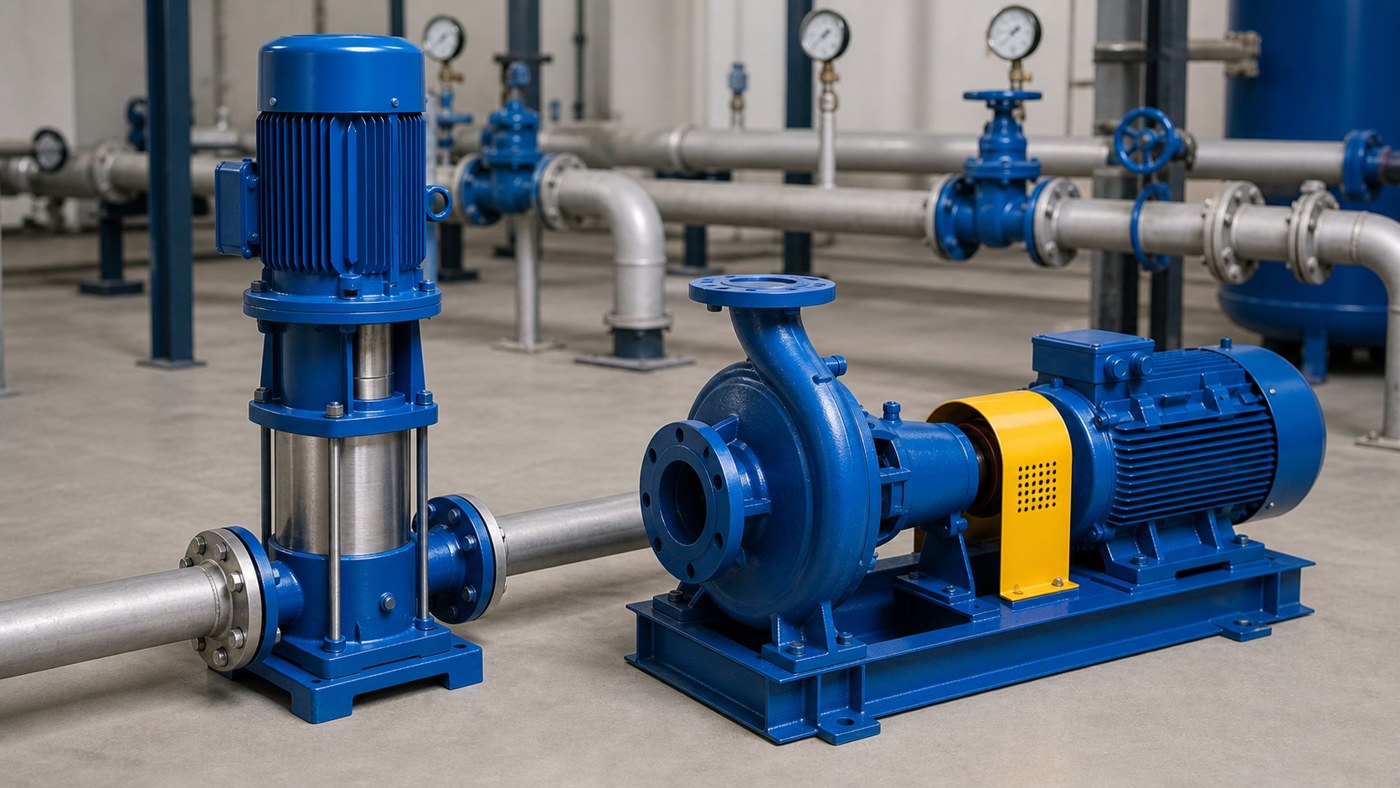
Taco KV vertical inline pumps require regular bearing inspection and lubrication to maintain reliable operation, but the maintenance interval depends on bearing type, operating hours, and ambient conditions rather than a fixed calendar schedule. Most vertical inline pumps use either sealed bearings that need no service or grease-lubricated bearings that require regreasing every 2,000 to 8,000 operating hours. The practical maintenance routine starts with identifying which bearing configuration your pump uses, then building a log that tracks vibration, temperature, and lubrication history so you can spot deterioration before forced downtime.
Key Takeaways
- Check the pump nameplate and manual to confirm bearing type before planning lubrication—sealed bearings and grease-lubricated bearings require completely different service routines.
- Record bearing temperature, vibration level, and motor amperage at the same load condition each service visit to catch gradual changes that signal wear or misalignment.
- Use the correct grease type and avoid over-greasing, which forces old lubricant into the motor or seal cavity and causes contamination failures.
- Inspect coupling alignment, pipe strain, and suction conditions during bearing service because these system factors cause most premature bearing failures.
- For fire pump or critical HVAC duty, schedule lubrication during planned downtime and verify flow and pressure after reassembly to confirm nothing shifted during service.
Identifying Lubrication Points on Vertical Inline Pumps
Vertical inline pumps mount the motor above the pump body, which places the motor bearings and sometimes a separate pump bearing in positions that require different access and service procedures. Taco KV pumps typically use one of three bearing arrangements: permanently lubricated sealed bearings in the motor with no pump-end bearing, sealed pump and motor bearings, or motor bearings with grease fittings plus a cartridge-style pump bearing. The pump nameplate or installation manual will specify which configuration applies to your model and frame size.
If the motor has grease fittings, they will be located on the motor housing near each bearing. Standard NEMA motors often have a relief plug opposite the grease fitting to allow old grease to escape during regreasing. If your pump has a separate pump-end bearing, the bearing housing will be visible below the motor mounting flange, and a grease fitting or inspection plug will indicate service access. Some enclosed designs require partial disassembly to reach the pump bearing, which makes the service interval choice more important.
Lubrication Schedule and Grease Selection
The correct regreasing interval depends on bearing size, speed, load, and operating temperature. A typical range for vertical inline pumps in HVAC or building water service is every 4,000 operating hours, but motors running continuously in hot environments or with high radial loads may need service every 2,000 hours. Motors in clean, moderate-temperature conditions with low duty factors can extend to 8,000 hours. The manual for your specific motor frame will provide the recommended interval.
Use a high-quality lithium-complex or polyurea grease rated for electric motor bearings, typically NLGI Grade 2. Avoid mixing grease types during service because incompatible thickeners can cause separation and bearing damage. The grease should have a dropping point above 350°F and good oxidation stability. Common specifications include Mobil Polyrex EM, Shell Gadus S2 V220, or equivalent products meeting NLGI GC-LB standards. Do not use general-purpose automotive grease or waterproof marine grease, which lack the high-temperature stability and low-noise characteristics required for continuous motor operation.
Regreasing Procedure to Avoid Over-Lubrication
Over-greasing is a more common field mistake than under-greasing. Excess grease migrates into the motor windings or pump seal cavity, causing insulation breakdown or seal face damage. The correct procedure is to add grease slowly while the motor is running, allowing the bearing to work the new grease in and purge old grease through the relief port. If the motor must be stopped during greasing, run it for 30 minutes afterward with the relief plug removed so excess grease can escape.
A typical greasing quantity for fractional and small integral horsepower motors is 1 to 3 grams per bearing, which translates to roughly 3 to 10 pump strokes from a hand-operated grease gun. Larger motors may require more, but the manual will specify the correct volume. Stop adding grease as soon as you see fresh grease at the relief port. If the motor has no relief port, add only half the calculated volume and monitor bearing temperature during the next run cycle. A sudden temperature increase indicates over-greasing, and the motor should be allowed to purge excess grease naturally over several hours of operation.
Monitoring Bearing Condition Between Service Intervals
A lubrication schedule only works if bearing condition is monitored between service visits. Record the following data during each site check:
| Parameter | Measurement method | Action trigger |
|---|---|---|
| Bearing temperature | Infrared thermometer or bearing sensor | 10°F increase over baseline or above 180°F |
| Vibration | Handheld analyzer or smartphone app | Velocity increase above 0.3 in/s or new frequency peaks |
| Motor current | Clamp meter on each phase | Imbalance above 5% or overload condition |
| Noise | Subjective or sound meter | Grinding, squealing, or knocking sounds |
Compare each reading to the baseline established when the pump was new or freshly serviced. A bearing that runs 20 degrees hotter than normal is failing even if the absolute temperature is still within the motor rating. The trend reveals the problem, not the single number.
Seal Inspection and Mechanical Seal Maintenance
While servicing the bearings, inspect the mechanical seal or packing gland for leakage, wear, and alignment. A mechanical seal in good condition should show no visible leakage or a controlled weep of a few drops per minute, depending on seal design. If leakage increases after bearing service or coupling alignment, the pump shaft may have moved, which changes the seal face load and causes rapid wear.
Check that the seal flush line, if present, has adequate flow and that the flush water is clean. Sediment or air in the flush line will destroy the seal faces within hours. For pumps handling hot water above 180°F, verify that the seal is designed for the temperature and that cooling is adequate. A seal rated for 200°F will fail quickly at 220°F even though the pump curve shows acceptable performance.
Coupling and Alignment Checks During Bearing Service
Bearing lubrication is the right time to inspect coupling condition and motor-to-pump alignment. A flexible coupling absorbs small misalignment, but it cannot correct large offset or angular errors, and misalignment loads transfer directly into the bearings and seal. Remove the coupling guard and check the coupling element for cracks, wear, or distortion. If the coupling shows uneven wear on one side, alignment is incorrect.
Use a straightedge or dial indicator to check alignment if the pump and motor have been disturbed or if vibration has increased since the last service. Acceptable alignment for most vertical inline pumps is within 0.003 inches offset and 0.001 inches per inch of coupling diameter for angularity. If you cannot measure alignment precisely, at least verify that the coupling gap is even around the circumference and that the motor mounting bolts are tight.
System Factors That Accelerate Bearing Wear
Bearing failures are often blamed on poor lubrication when the real cause is a system problem. Cavitation, air entrainment, operation far from the best efficiency point, and pipe strain all load the bearings beyond their design limits and shorten life regardless of lubrication quality. Before approving a bearing replacement or shortening the lubrication interval, check the following:
- Suction pressure is adequate and the net positive suction head available exceeds the pump requirement by at least 3 feet.
- The pump is operating within 70% to 110% of its best efficiency flow, not far out on the curve where radial loads increase.
- Pipe connections are aligned and supported independently so that pipe weight and thermal expansion do not load the pump flanges.
- The pump is not short-cycling or starting more than 10 times per hour, which causes thermal stress and grease breakdown.
- Motor voltage and phase balance are within tolerance, and the motor is not single-phasing or running on a weak supply.
If one or more of these conditions is wrong, correcting the system issue is more effective than increasing the lubrication frequency.
FAQs
Can I use any grease as long as it is rated for bearings?
No. Electric motor bearings require grease with specific properties including low oil separation, high dropping point, low noise characteristics, and compatibility with the bearing seal material. General-purpose or automotive greases may have the wrong viscosity, cause seal swelling, or separate at operating temperature. Use only grease that meets NLGI GC-LB or the motor manufacturer’s specification.
How do I know if my pump has sealed bearings or serviceable bearings?
Check the motor nameplate or manual for bearing type. If the motor housing has grease fittings, the bearings are serviceable. If there are no fittings and the nameplate says “permanently lubricated” or “sealed bearings,” no lubrication service is required. The motor will need bearing replacement when the sealed units reach end of life, typically 40,000 to 100,000 hours depending on load and environment.
What happens if I skip a lubrication interval?
Bearing life decreases, but one missed interval rarely causes immediate failure. The risk increases with load, speed, and temperature. A lightly loaded motor in a clean environment may tolerate a delayed service, but a motor in a hot boiler room or running at full load continuously will degrade faster. Prioritize service for the most critical or heavily loaded pumps if the maintenance schedule falls behind.
Should I grease the pump while it is running or stopped?
Most motor manufacturers recommend greasing while running so the bearing can distribute the new grease and purge old grease through the relief port. If local safety rules require the motor to be locked out, add grease with the motor stopped, then run the motor with the relief plug removed for at least 30 minutes to allow excess grease to escape and prevent over-lubrication damage.
How do I document lubrication and bearing service for fire pump annual testing?
Keep a log that records the service date, operating hours at service, grease type and quantity, bearing temperature before and after service, vibration readings, and any coupling or alignment work performed. NFPA 25 requires annual testing and inspection of fire pumps, and the authority having jurisdiction may ask for maintenance records during the inspection. Include flow and pressure test results after any service that could affect pump alignment or performance.
Conclusion
Effective lubrication maintenance for Taco KV vertical inline pumps depends on knowing your bearing type, following the correct regreasing interval and procedure, and monitoring bearing condition between services. Avoid over-greasing, use the correct grease specification, and inspect coupling alignment and system conditions during each service visit. A simple log that tracks temperature, vibration, and lubrication history will catch bearing deterioration early and prevent forced outages. If bearing life is shorter than expected, investigate system factors like cavitation, misalignment, and operating point before simply increasing the lubrication frequency.