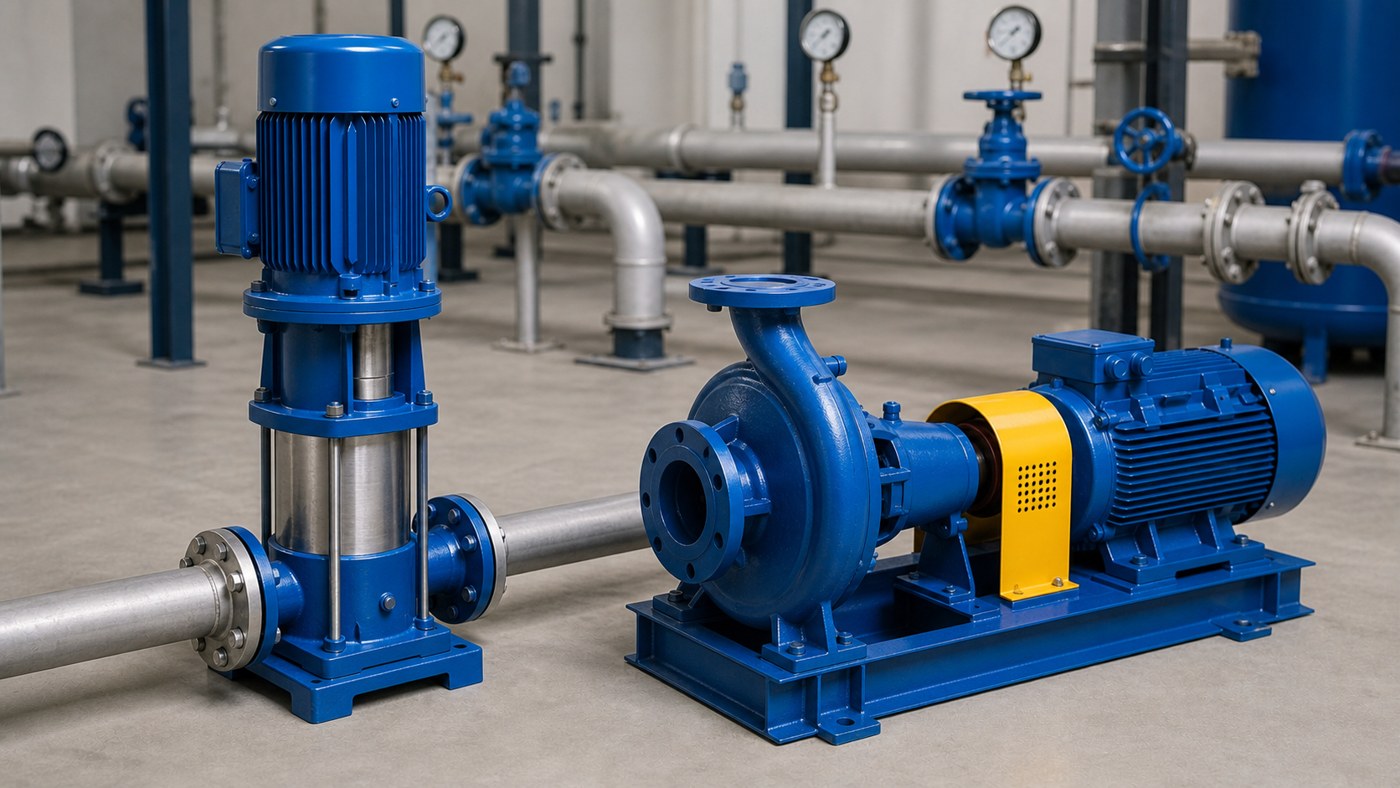
Greasing a Taco KV vertical inline pump correctly extends bearing life, reduces noise, and prevents unplanned shutdowns. The KV series uses grease-lubricated ball bearings in most frame sizes, with grease fittings accessible from the motor end. This guide covers the greasing interval, the correct lubricant type, the procedure, and the field checks that confirm proper lubrication without over-greasing or contamination.
Key Takeaways
- Standard KV pumps require greasing every 2,000 to 4,000 operating hours, depending on duty cycle and ambient temperature.
- Use only NLGI Grade 2 lithium complex or polyurea grease rated for motor bearings; mixing grease types causes breakdown.
- Relieve pressure by removing the bottom plug before adding grease through the top fitting, and run the motor briefly to purge excess.
- Check for heat, noise, and vibration after greasing; these indicate over-greasing, contamination, or bearing wear.
- Document greasing dates and grease type to maintain warranty coverage and track bearing condition trends.
Understanding Taco KV Bearing Lubrication
Most Taco KV vertical inline pumps use sealed ball bearings that require periodic regreasing. The motor housing includes a grease fitting at the top bearing and a relief plug at the bottom. The interval depends on operating hours, starts per day, and ambient temperature. A pump running continuously in a cool mechanical room may go 4,000 hours between grease applications, while a unit cycling frequently in a hot boiler room may need service every 2,000 hours.
Taco recommends NLGI Grade 2 grease compatible with motor bearings. Lithium complex and polyurea greases are common choices, but they should not be mixed. Switching grease types requires a full bearing flush, which is beyond routine maintenance. Check the motor nameplate or installation manual for the specified grease type before starting.
Step-by-Step Greasing Procedure
Before greasing, record the operating amperage, vibration level, and bearing temperature if accessible. These baseline readings help detect problems after the procedure. Turn off and lock out the pump, then allow the motor to cool if it has been running.
Remove the Relief Plug
Locate the grease relief plug at the bottom of the motor bearing housing. This plug allows old grease and excess new grease to escape, preventing pressure buildup that can force grease past seals and into the motor windings. Remove the plug and place a container or rag beneath it to catch expelled grease.
Add Grease Through the Top Fitting
Wipe the grease fitting clean to prevent dirt entry. Attach a grease gun loaded with the correct grease type. Pump grease slowly until you see fresh grease appear at the relief hole or until resistance increases sharply. For most KV frame sizes, this takes 2 to 4 pumps of a standard grease gun. Do not continue pumping after fresh grease appears; over-greasing increases bearing drag and heat.
Reinstall the Relief Plug and Purge Excess
Wipe away expelled grease and reinstall the relief plug finger-tight, then snug with a wrench. Restore power and run the pump unloaded or at low flow for 10 to 15 minutes. This run-in period allows excess grease to distribute and any trapped air to escape. Check for unusual noise, vibration, or heat during this period.
Final Checks
After the run-in, check bearing temperature, amperage, and vibration. Bearing temperature should stabilize within 10°F of pre-greasing levels. Higher temperatures suggest over-greasing or contamination. Record the greasing date, grease type, and operating readings in the maintenance log.
Common Greasing Mistakes
Over-greasing is the most frequent error. Excess grease increases bearing drag, raises operating temperature, and can force grease into the motor. If the motor draws higher amperage or the bearing feels hotter after greasing, remove the relief plug and run the motor again to expel more grease.
Using the wrong grease type or mixing incompatible greases causes premature breakdown. Always confirm the grease specification before application. If the previous grease type is unknown, consider a bearing inspection and flush before regreasing.
Skipping the relief plug removal traps old grease and contaminants, reducing the benefit of fresh lubrication. Always open the relief before pumping new grease.
Greasing while the motor is hot can cause grease to soften and flow into areas where it should not go. Allow the motor to cool to touch before greasing.
When to Suspect Bearing Problems
If greasing does not restore smooth operation, the bearings may be damaged. Persistent noise, vibration, or heat after correct greasing indicates wear, contamination, or misalignment. High-pitched squealing or grinding sounds suggest advanced bearing failure and require immediate shutdown and inspection.
Moisture contamination from condensation or seal failure turns grease into a gray or brown sludge. If expelled grease looks discolored or watery, replace the bearings and inspect seals before returning the pump to service.
Greasing Interval Guidelines
| Operating Condition | Greasing Interval |
|---|---|
| Continuous operation, cool ambient | Every 4,000 hours |
| Continuous operation, warm ambient (above 85°F) | Every 3,000 hours |
| Frequent starts and stops | Every 2,000 hours |
| High ambient temperature or dirty environment | Every 2,000 hours or sooner |
For pumps in critical service such as fire protection or HVAC circulation, schedule greasing during planned maintenance windows rather than waiting for bearing noise. Preventive greasing is faster and less disruptive than emergency bearing replacement.
Documentation and Warranty
Taco warranty terms typically require documented maintenance. Record each greasing event with the date, operating hours, grease type, and any observations about bearing condition. This log supports warranty claims and helps predict bearing life. If bearings fail prematurely, the maintenance record shows whether lubrication was performed correctly and on schedule.
FAQs
Can I use automotive grease for a Taco KV pump?
No. Automotive greases are formulated for different speeds, loads, and temperatures than motor bearings. Use only NLGI Grade 2 grease specified for electric motor bearings, such as lithium complex or polyurea types.
What happens if I over-grease the bearings?
Excess grease increases drag, raises bearing temperature, and can force lubricant past seals into the motor windings. If amperage or temperature rises after greasing, remove the relief plug and run the motor to expel excess grease.
How do I know if the bearings need replacement instead of greasing?
Persistent noise, vibration, or heat after correct greasing indicates bearing damage. Grinding sounds, rough rotation by hand when the motor is off, or visible play in the shaft all require bearing replacement.
Should I grease the pump before or after operation?
Grease after the motor has cooled. Greasing a hot motor can cause the lubricant to soften and migrate where it should not go. If the pump must return to service immediately, grease while cool and run briefly to distribute the lubricant before loading.
Can I extend the greasing interval if the pump runs infrequently?
Not safely. Even when idle, grease can dry out, oxidize, or attract moisture. For pumps in standby service, grease at least once per year regardless of operating hours, and run the pump monthly to distribute the lubricant.
Conclusion
Greasing a Taco KV vertical inline pump is straightforward when you follow the correct procedure: remove the relief plug, add the specified grease through the top fitting, reinstall the plug, and run the motor briefly to purge excess. Over-greasing and using the wrong lubricant are the most common mistakes. Check bearing temperature and amperage after greasing to confirm proper lubrication. For pumps in critical service or harsh environments, shorten the greasing interval and document each service event to support warranty coverage and predict bearing life. If noise, vibration, or heat persists after correct greasing, inspect the bearings for wear or contamination before returning the pump to full operation.