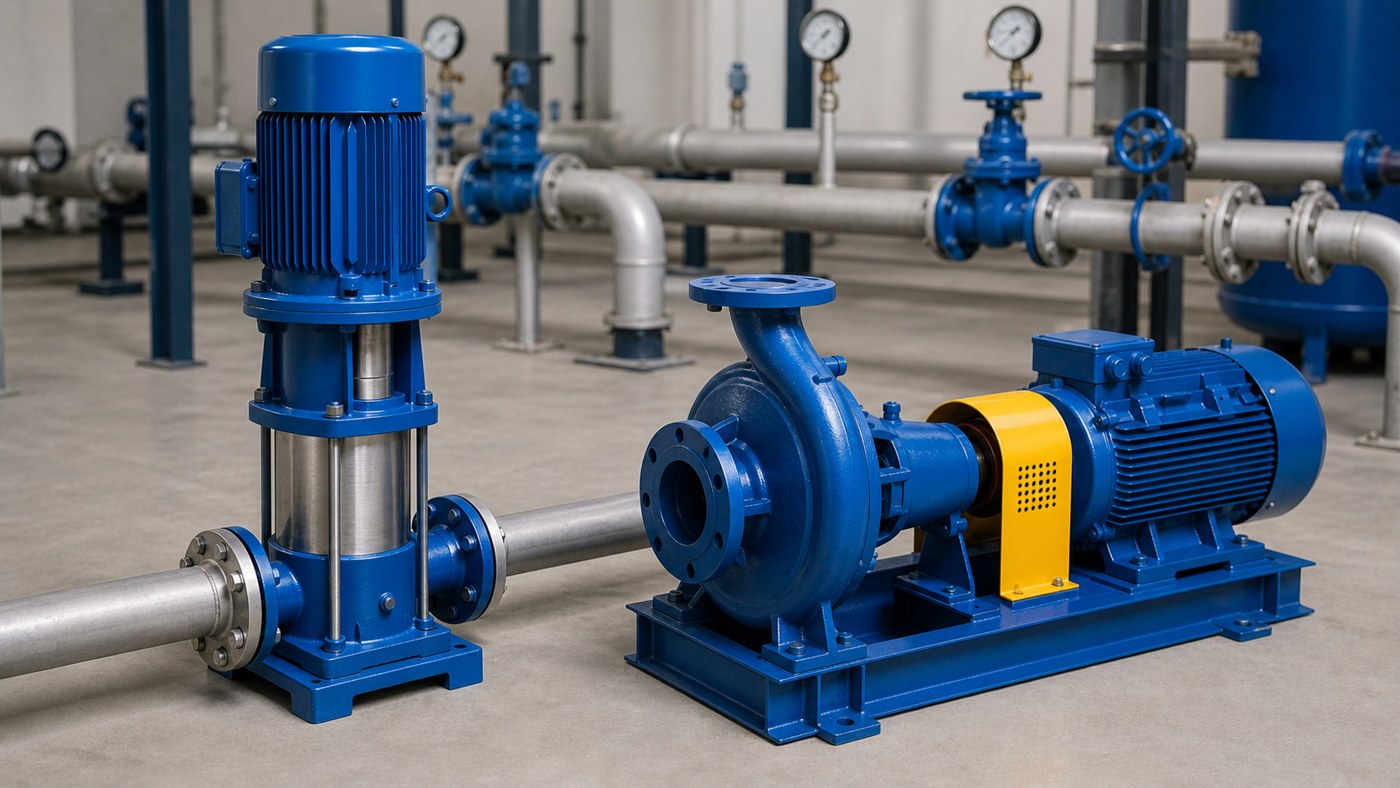
Vertical inline pump bearing maintenance keeps pumps running efficiently and prevents costly unplanned shutdowns. Most bearing failures in vertical inline pumps result from contaminated lubricant, misalignment, excessive vibration, or extended intervals between inspections. A solid maintenance program includes regular vibration monitoring, lubricant inspection and replacement on schedule, alignment verification after any motor or coupling work, and bearing replacement before metallurgical fatigue causes secondary damage to the shaft or housing.
Key Takeaways
- Inspect bearing condition every three to six months depending on operating hours, with shorter intervals for pumps in dirty, hot, or high-vibration environments.
- Grease-lubricated bearings typically need regreasing every 2,000 to 4,000 operating hours; oil-lubricated bearings need oil changes every 4,000 to 8,000 hours or annually.
- Vibration amplitude above 0.3 inches per second RMS or a sudden increase of 25 percent indicates bearing wear or misalignment requiring immediate investigation.
- Replace bearings when operating temperature rises 15°F above baseline, noise increases noticeably, or vibration trends upward over consecutive readings.
- Document bearing type, lubricant grade, replacement date, and operating hours at each service to identify patterns and optimize intervals.
Bearing Types and Service Life in Vertical Inline Pumps
Vertical inline pumps commonly use either ball bearings or sleeve bearings depending on pump size, speed, and load. Ball bearings handle radial and thrust loads simultaneously and are the standard choice for pumps up to 50 horsepower. These bearings typically deliver 20,000 to 40,000 operating hours under normal conditions with proper lubrication and alignment. Sleeve bearings appear in larger pumps and high-temperature applications where oil lubrication and continuous cooling are available. Sleeve bearing life depends heavily on lubricant film thickness and operating temperature, making maintenance intervals more critical.
Most manufacturers specify L10 bearing life, meaning 90 percent of bearings will exceed the rated hours before fatigue failure. Field life often falls short of L10 ratings because installation errors, contamination, or system vibration accelerate wear. A pump operating with 0.005-inch misalignment can cut bearing life in half. Contaminated grease reduces life by 30 to 60 percent depending on particle size and concentration.
Inspection Schedule and Warning Signs
Establish a baseline vibration reading and bearing temperature within the first week of pump operation. Schedule inspections every three months for pumps running continuously in clean environments. Reduce the interval to monthly or every 500 operating hours for pumps handling abrasive liquids, operating above 180°F, or installed in locations with high ambient dust or moisture. During each inspection, measure vibration at the motor and pump bearing housings, check bearing temperature with an infrared thermometer, listen for unusual noise, and inspect lubricant condition.
Early warning signs include a grinding or squealing noise, vibration increase of more than 0.05 inches per second from baseline, bearing temperature 10 to 15°F above normal, or grease that appears discolored, separated, or contaminated with water or metal particles. Any of these conditions warrants immediate bearing inspection and lubricant replacement or bearing replacement if wear is confirmed.
| Condition | Probable Cause | Action Required |
|---|---|---|
| High-frequency noise | Ball bearing race damage or contamination | Replace bearing within 100 operating hours |
| Low-frequency rumble | Misalignment or loose mounting | Check alignment and foundation bolts immediately |
| Temperature rise >15°F | Insufficient lubrication or bearing wear | Add lubricant or schedule replacement |
| Intermittent high vibration | Loose coupling or worn bearing | Inspect coupling and bearing clearance |
Lubrication Procedures and Lubricant Selection
Grease-lubricated bearings require regreasing through the pump or motor grease fittings while the unit runs at normal speed. Remove the grease relief plug or open the drain before adding grease to allow old lubricant and contaminants to purge. Add grease slowly until fresh grease appears at the relief port, then add one or two additional pumps of grease. Run the pump for 15 to 30 minutes before reinstalling the relief plug to allow excess grease to expel and bearing temperature to stabilize.
Use the grease type specified on the pump nameplate or motor data sheet. Most vertical inline pumps use NLGI Grade 2 lithium complex or polyurea grease with an operating range of -20°F to 300°F. High-temperature applications above 200°F require synthetic or polyurea greases. Mixing incompatible grease types causes separation and loss of lubricating film, so flush bearings completely when changing grease formulations.
Oil-lubricated bearings need annual oil changes or after 4,000 to 8,000 operating hours, whichever comes first. Drain oil while the bearing is warm but not hot to ensure complete drainage of contaminants. Inspect drained oil for metal particles, water contamination, or burnt odor. Flush the bearing housing with clean oil if contamination is visible, then refill to the correct level marked on the sight glass or dipstick. Use ISO VG 32 or VG 46 turbine oil for most applications unless the manufacturer specifies a synthetic lubricant for high-temperature or food-grade service.
Bearing Replacement Decision Logic
Replace bearings when vibration exceeds 0.4 inches per second RMS and does not decrease after regreasing and alignment correction, when bearing temperature remains more than 20°F above baseline after lubricant service, or when metallurgical testing or visual inspection reveals pitting, spalling, or discoloration on races or balls. Do not wait for catastrophic failure. A bearing that fails suddenly during operation can damage the shaft, housing, seal, and impeller, turning a $200 bearing replacement into a $5,000 rebuild.
Plan replacement during a scheduled outage when spare parts, tools, and qualified personnel are available. Order bearings by the exact manufacturer part number or by bore, outer diameter, width, and seal configuration if cross-referencing. Verify the replacement bearing matches the original in load rating, seal type, and tolerance class. Using a bearing with lower load capacity or wrong internal clearance causes premature failure.
Field Replacement Procedure
Disconnect and lock out electrical power before starting bearing replacement. Remove the coupling guard and coupling to access the inboard bearing. On pumps with cartridge-style bearing assemblies, remove the retaining bolts and slide the assembly from the shaft. On pumps with individually mounted bearings, use a bearing puller to remove the bearing from the shaft without damaging the shaft surface or bearing seat.
Clean the shaft and bearing housing thoroughly with solvent and inspect for wear, corrosion, or damage. Check shaft runout with a dial indicator; runout exceeding 0.002 inches requires machining or shaft replacement. Install the new bearing using a bearing heater or hydraulic press to apply force evenly to the inner race. Never hammer directly on the bearing. Pack grease into the bearing before installation if it is a shielded or sealed type, or pack the housing if it is an open bearing with external sealing.
After bearing installation, check shaft end play and radial clearance per the pump manual. Reinstall the coupling with the correct alignment tolerance, typically 0.002 to 0.003 inches total indicated runout for pumps under 100 horsepower. Run the pump unloaded for five minutes and verify bearing temperature and vibration are within acceptable range before returning to full service. Record the bearing part number, installation date, operating hours at replacement, and reason for replacement in the maintenance log.
Common Mistakes That Shorten Bearing Life
Overgreasing is more common than undergreasing and causes high operating temperature, excessive seal pressure, and premature seal failure. Add only the amount specified in the maintenance manual, typically two to four pumps of grease every 2,000 hours for fractional-horsepower motors and six to ten pumps for 20-horsepower and larger motors. Mixing grease types without flushing creates incompatible lubricant that separates under heat and load. Using the wrong grease viscosity for the operating temperature accelerates wear; grease that is too thick at startup causes high torque and temperature, while grease that is too thin at operating temperature allows metal-to-metal contact.
Installing bearings without proper alignment causes uneven load distribution and reduces bearing life by 50 percent or more. Recheck alignment after every coupling, motor, or pump disassembly. Running a pump with damaged or missing coupling components transmits shock loads to bearings and shortens life dramatically. Replace worn coupling elements and hardware during bearing service to protect the new bearing investment.
FAQs
How do I know when to repack grease versus replace the bearing?
Repack grease when bearing temperature is normal and vibration is stable but the service interval has arrived. Replace the bearing when temperature stays elevated after regreasing, when vibration trends upward over three consecutive readings, or when you hear grinding or squealing noise that does not resolve with lubrication.
Can I install a sealed bearing in place of an open bearing to reduce maintenance?
Yes, if the bearing bore, outer diameter, and width match exactly and the pump environment is clean. Sealed bearings are pre-packed with grease and eliminate regreasing, but they cannot be repacked and must be replaced when the factory grease degrades. Sealed bearings are not suitable for high-temperature applications above 200°F or environments with heavy contamination that requires frequent flushing.
What causes bearing failure within months of installation?
The most common causes are installation damage from improper mounting technique, contaminated lubricant introduced during installation, misalignment between motor and pump, or incorrect bearing selection for the load and speed. Verify alignment within 0.003 inches, use clean tools and lubricant, and heat bearings to 200°F for installation rather than hammering them onto the shaft.
Should I replace both motor and pump bearings at the same time?
Not automatically. Replace bearings based on condition and operating hours, not on schedule alone. If one bearing shows wear and the other is within acceptable vibration and temperature range with less than half its expected life consumed, replace only the worn bearing. If both bearings have similar operating hours and one has failed, inspect the other carefully and consider replacement to avoid a second outage shortly after.
Do I need special tools for bearing replacement in the field?
A bearing puller, hydraulic press or bearing heater, dial indicator for alignment check, infrared thermometer, vibration pen, and torque wrench cover most field bearing work. A bearing heater is safer and faster than a torch or hot plate for thermal installation. Induction heaters heat bearings uniformly to 200 to 250°F in minutes without risk of overheating or fire.
Conclusion
A structured bearing maintenance program for vertical inline pumps includes routine vibration and temperature monitoring, scheduled lubrication, and timely bearing replacement before secondary damage occurs. Document each service with bearing type, lubricant grade, operating hours, and replacement reason to refine intervals and catch patterns early. Address alignment, coupling condition, and system vibration during every bearing service to protect the investment and extend mean time between failures. Bearing maintenance is not a calendar task; it is a condition-based decision that uses trending data and inspection findings to prevent unplanned outages and protect connected equipment.