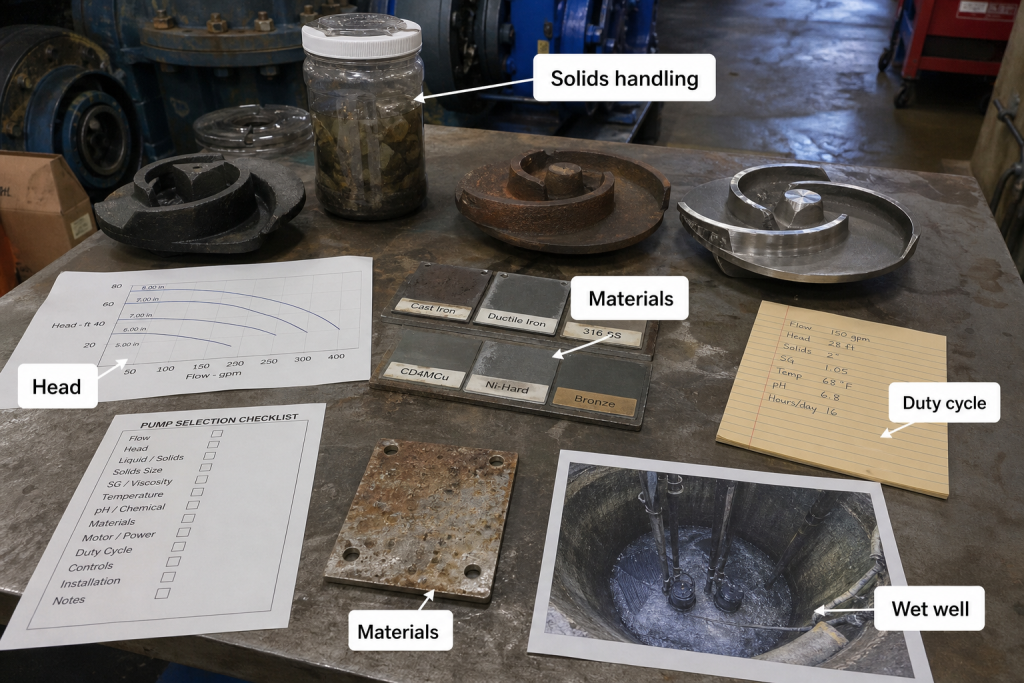
Wastewater Pump Selection: Solids Handling, Head, Materials, and Station Duty
Select wastewater pumps by matching solids passage, total dynamic head, wetted materials, and duty cycle to application constraints and station hydraulics.

Select wastewater pumps by matching solids passage, total dynamic head, wetted materials, and duty cycle to application constraints and station hydraulics.
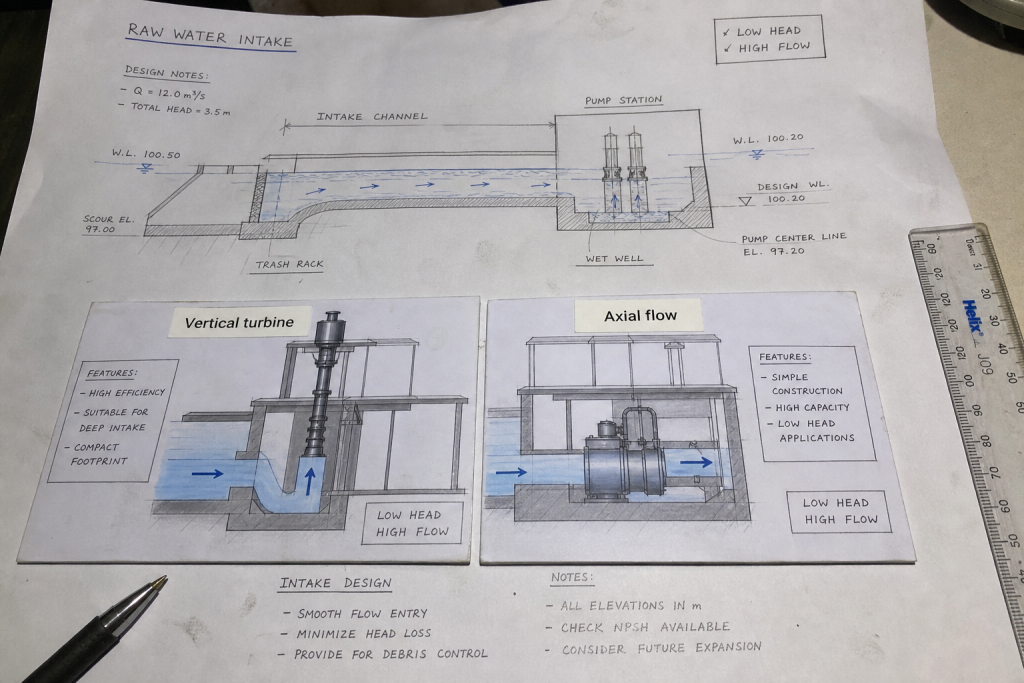
Compare vertical turbine and axial flow pumps for raw water intake applications. Head-flow characteristics, intake geometry, and selection criteria for municipal and industrial systems.
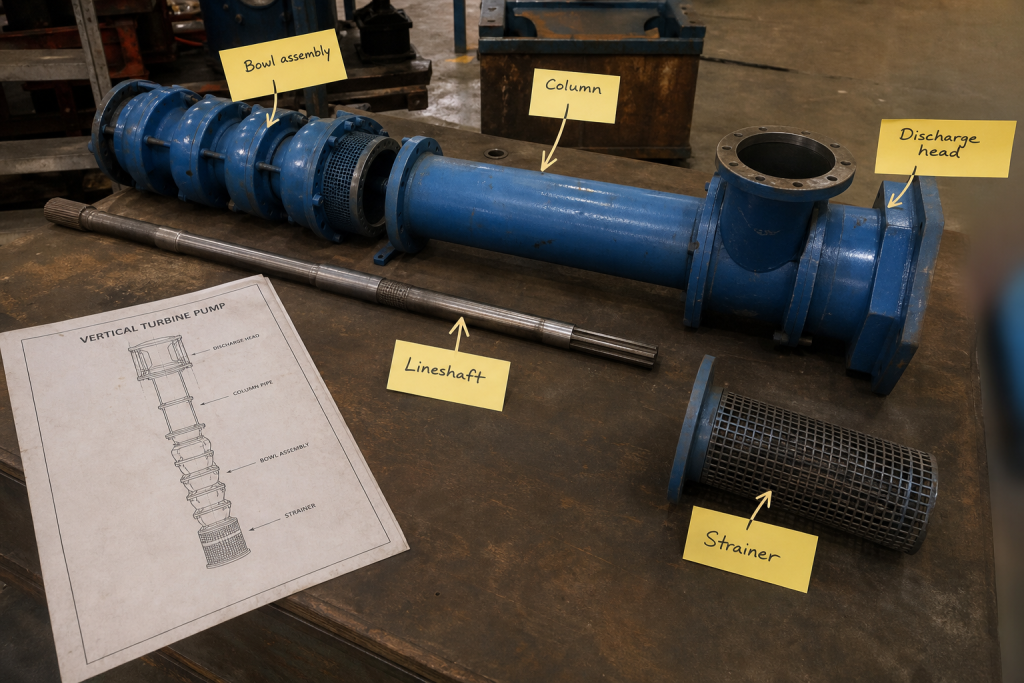
Vertical turbine pump diagram showing bowl assembly stages, column pipe sections, lineshaft drive configuration, and discharge head. Component sizing and installation decisions for deep-well applications.
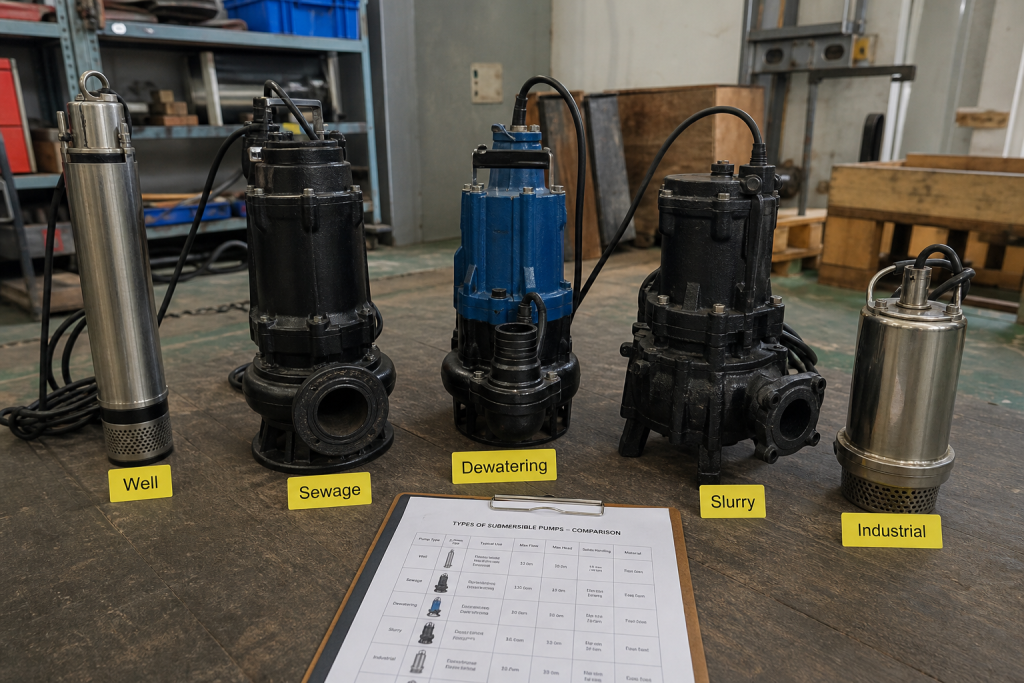
Compare well, sewage, dewatering, slurry, and industrial submersible pump designs with selection criteria, motor cooling methods, and application-specific construction requirements.
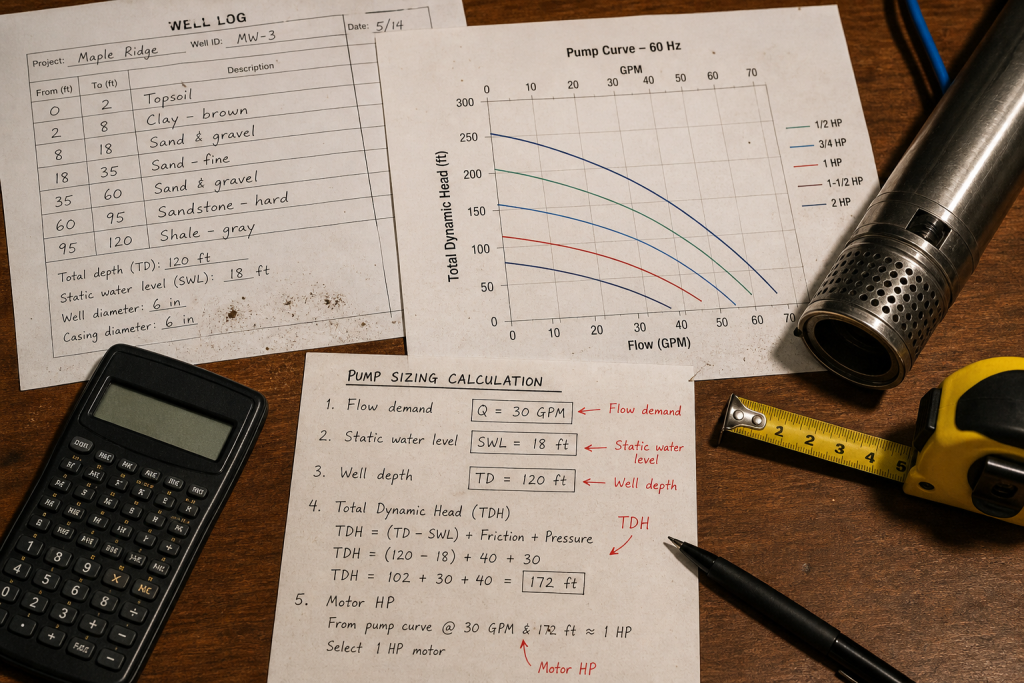
Calculate submersible well pump size using flow rate, total dynamic head, well depth, and drawdown data. Includes motor selection formulas and field verification steps.
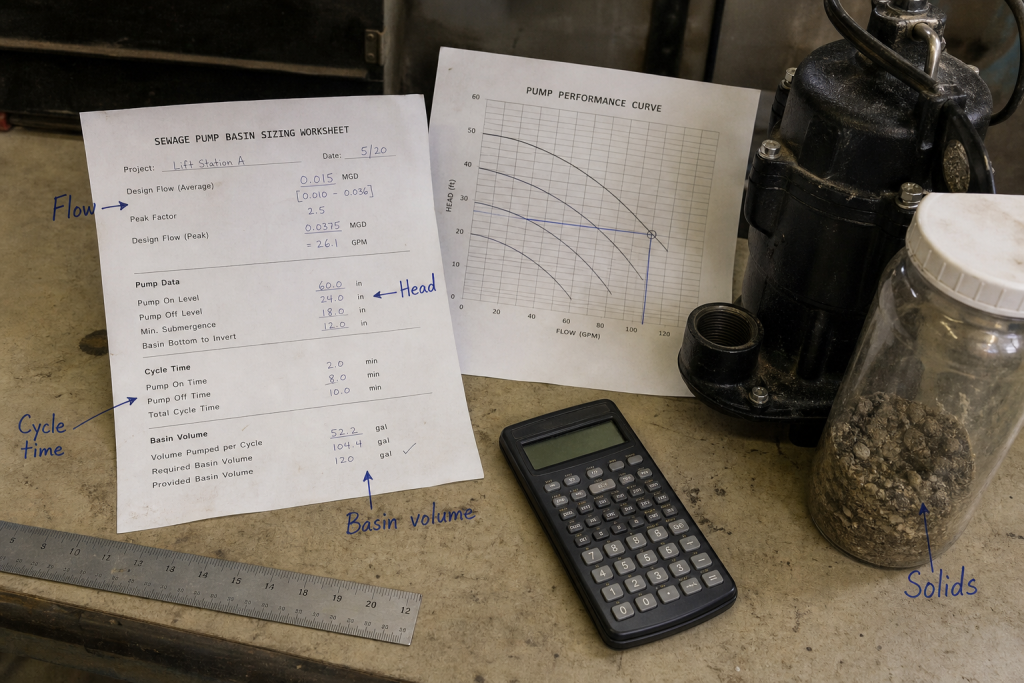
Size sewage pumps correctly using flow rate, total dynamic head, solids clearance, and basin cycling formulas. Includes calculation methods and selection criteria.
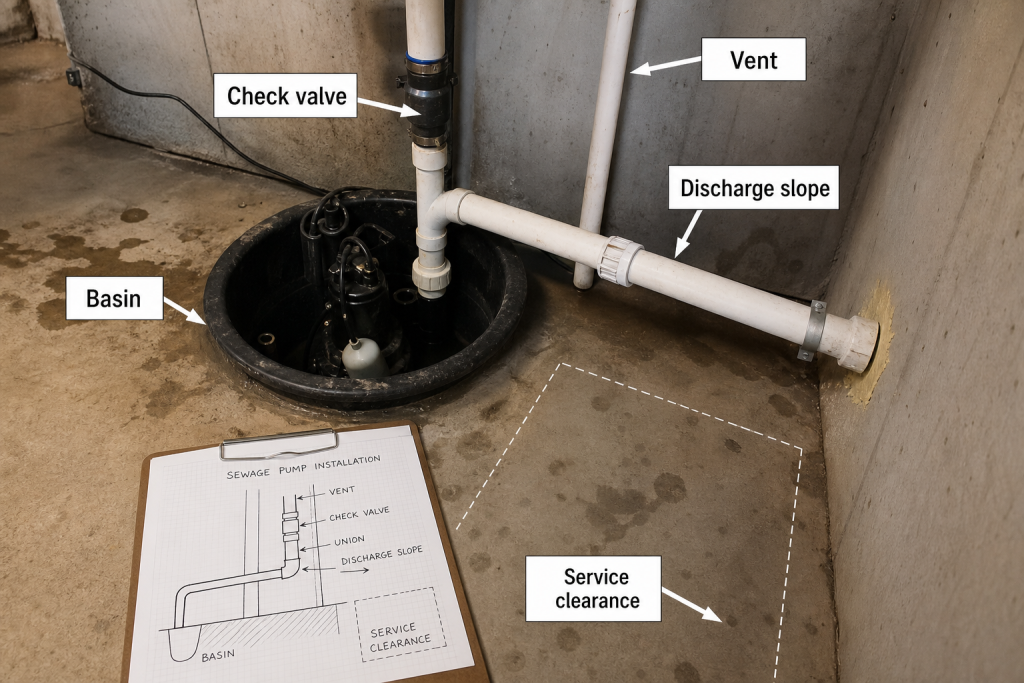
Complete sewage pump installation diagrams covering basin depth, check valve placement, vent sizing, and discharge piping. Includes pump placement rules and system layout requirements.
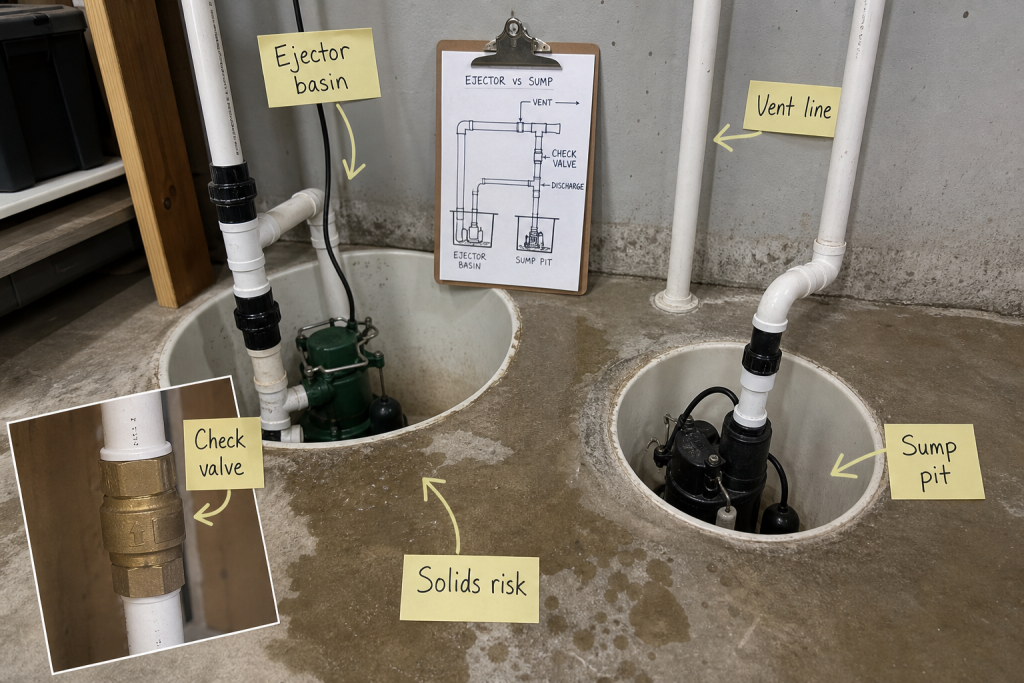
Compare sewage ejector pump vs sump pump by installation depth, solids handling capability, and backup requirements. Practical selection rules for basement drainage and wastewater systems.
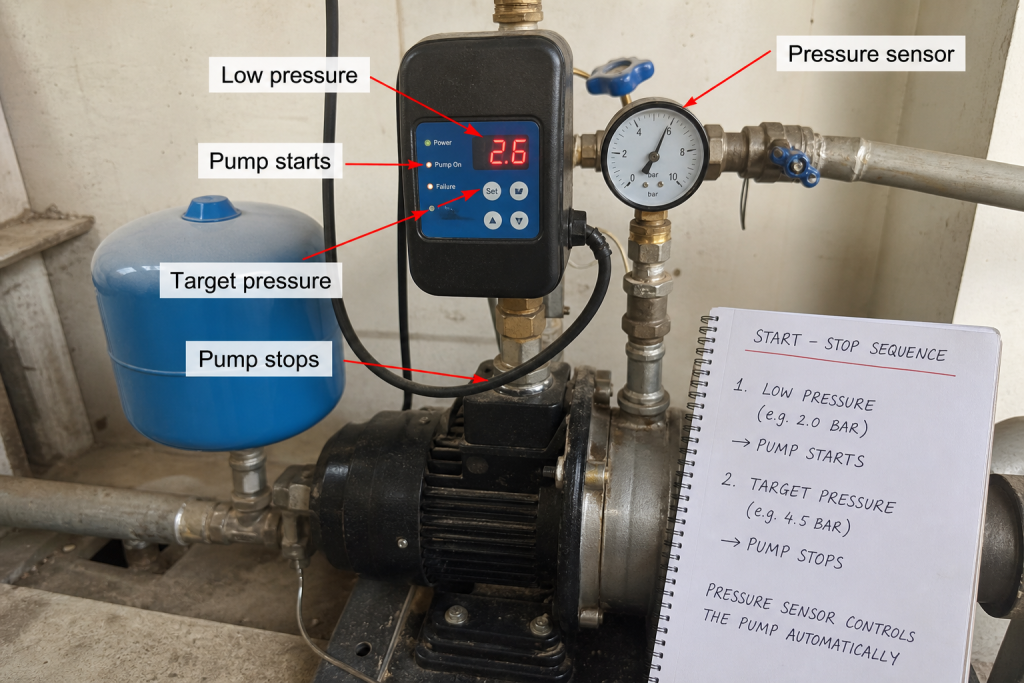
Learn how booster pumps work through pressure sensing, control logic, and system response. Covers operating modes, setpoint configuration, and commissioning checks for industrial applications.
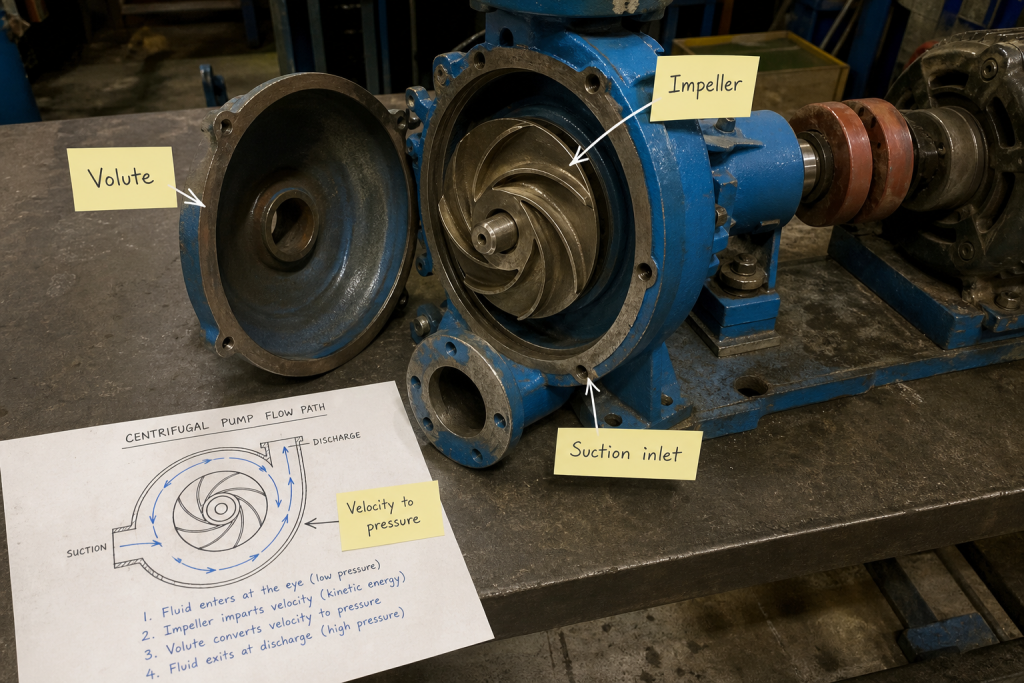
Learn how centrifugal pumps convert rotational energy through impeller design, flow path geometry, and head-capacity curves—plus operating limits and NPSH requirements.